The Power of Awareness (1952) by Neville Goddard —audiobook
Uploaded by Neil Sargisian on November 8, 2026 at 6:12 pm
The Power of Awareness (1952) by Neville Goddard —audiobook
"The Power of Awareness" is Neville Goddard's 1952 guide to the idea he taught for most of his life: your own consciousness is the only reality, and what you assume about yourself shapes the world you live in. In this complete, unabridged audiobook, Adam Hanin, a human narrator, reads it from the opening "I AM" to the closing chapter on reverence.
Who Was Neville Goddard?
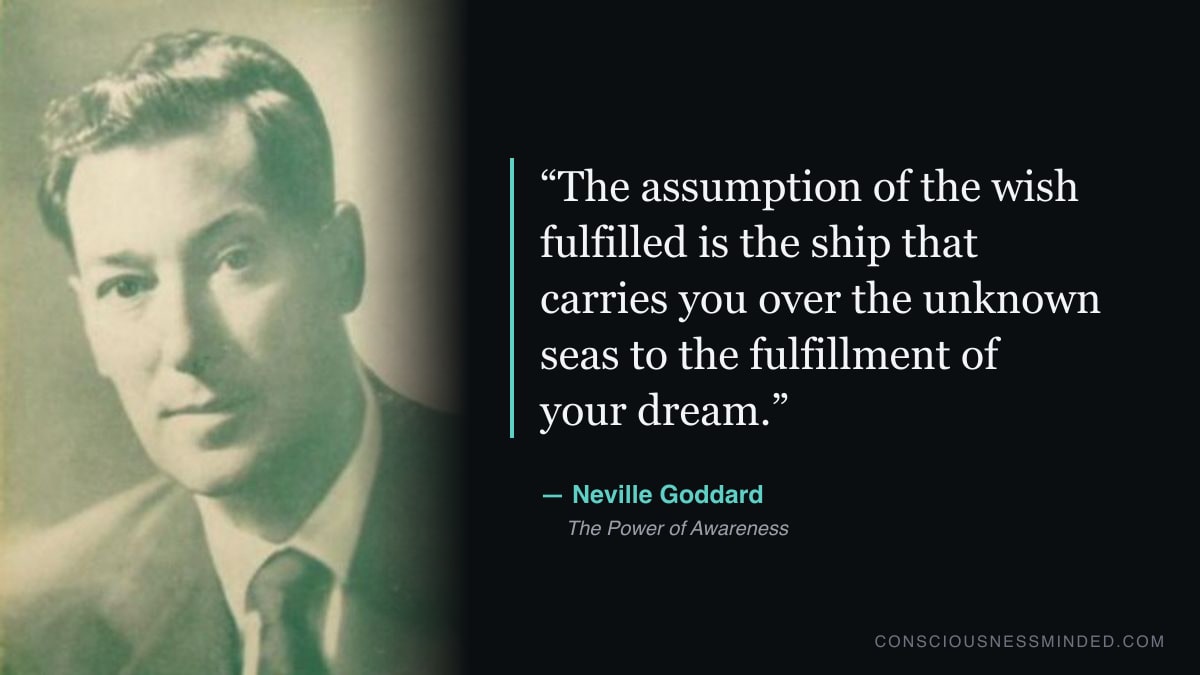
Neville Goddard, about 1939 (photo from the back cover of his book "At Your Command", public domain, via Wikimedia Commons)
Neville Lancelot Goddard's life began on February 19, 1905, in Fontabelle, Saint Michael, Barbados. He was the fourth of ten children, and his younger brother John Goddard became a well-known cricketer. At 17, Neville moved to New York City to study drama. By 1925 he was dancing at the Hippodrome, and soon he was headlining vaudeville stages in the act "Amerique and Neville".
However, the stage did not hold him. On a tour of London, Berlin and Paris he grew curious about metaphysics. Then, after the Great Depression began, he gave up dancing in 1929 to study mysticism. For the next seven years he learned from a teacher he called Abdullah, who taught him Kabbalah, Hebrew and an inner reading of the Bible.
Neville gave his first public lectures in February 1938 in New York. Later he spoke at The Town Hall, toured the United States, and in the mid-1950s hosted his own Sunday television series, "Neville", in Los Angeles. In all, he wrote 14 books and gave more than 300 lectures before his death on October 1, 1972. Today he is one of the best-known voices of the New Thought movement.
What The Power of Awareness Teaches
The book opens with a bold claim. Consciousness is one, Neville writes, even though it shows up in countless forms. At its center is the simple feeling "I AM". As he puts it, "I may forget who I am, where I am, what I am, but I cannot forget that I am." Everything else, rich or poor, sick or well, is a concept that I AM holds about itself.
From there, the chapters build a practical method. First, change your concept of yourself, because your world follows it. Next, expect the changes that follow to look like chance or coincidence to others, even though they come from your own consciousness. Then comes the core of the book, the law of assumption. In short, you assume the feeling that your wish is already fulfilled, and you keep living from that feeling.
Neville calls this "the crown of the mysteries". The assumption is everything, he says, and the realization is effortless. He even borrows from physics. The principle of least action governs everything from a planet's orbit to a pulse of light, and assumption is its inner version, because it works by "attention minus effort".
AI illustration: the ship of assumption crossing unknown seas toward a shore that is already real
Attention, Imagination and the Power of Awareness
Several chapters deal with attention. Neville quotes James 1:8: "A double-minded man is unstable in all his ways." Therefore, he says, keep your attention on things as you want them to be. In one of the book's most quoted lines, "you give beauty for ashes" when you do exactly that.
He also cites perception experiments by Merle Lawrence of Princeton and Adelbert Ames of Dartmouth. Their point, as Neville uses it, is that what you see depends less on what is there than on what you assume. For the same reason, he treats imagination as the real creative power, as long as you control it, rather than drift into idle daydreaming.
Two Stories from the Book
Neville rarely leaves an idea abstract. In "Case Histories", he tells of a prominent woman who had a city apartment and a country home. She could only afford the summer away if the apartment was rented. So, instead of worrying about tenants, she imagined herself already sleeping in the country house. According to Neville, a tenant took the apartment that very day.
In another story, a young wife hoped her husband, an Army Air Force instructor, would be posted to Florida. Her aunt told her to imagine they were already there, feeling the warm breeze and the salt air. Before long, new orders sent him to Florida.
The book closes with chapters on failure, faith, destiny and reverence. Neville also answers the obvious objection. When the method fails, he says, it is because the new state does not yet feel natural. In the end, the power of awareness is his name for the oldest idea in his teaching: imagination, held with feeling, is how you make a life.
This video was created and published by Master Key Society on YouTube. The commentary above is our own summary and context.
If you're inspired to explore the power of awareness further, subscribe to Consciousness Minded to receive more videos on spirituality, mindset, and personal transformation.
“The Power of Awareness” is Neville Goddard’s 1952 guide to the idea he taught for most of his life: your own consciousness is the only reality, and what you assume about yourself shapes the world you live in. In this complete, unabridged audiobook, Adam Hanin, a human narrator, reads it from the opening “I AM” to the closing chapter on reverence.
Who Was Neville Goddard?
Neville Goddard, about 1939 (photo from the back cover of his book "At Your Command", public domain, via Wikimedia Commons)
Neville Lancelot Goddard’s life began on February 19, 1905, in Fontabelle, Saint Michael, Barbados. He was the fourth of ten children, and his younger brother John Goddard became a well-known cricketer. At 17, Neville moved to New York City to study drama. By 1925 he was dancing at the Hippodrome, and soon he was headlining vaudeville stages in the act “Amerique and Neville”.
However, the stage did not hold him. On a tour of London, Berlin and Paris he grew curious about metaphysics. Then, after the Great Depression began, he gave up dancing in 1929 to study mysticism. For the next seven years he learned from a teacher he called Abdullah, who taught him Kabbalah, Hebrew and an inner reading of the Bible.
Neville gave his first public lectures in February 1938 in New York. Later he spoke at The Town Hall, toured the United States, and in the mid-1950s hosted his own Sunday television series, “Neville”, in Los Angeles. In all, he wrote 14 books and gave more than 300 lectures before his death on October 1, 1972. Today he is one of the best-known voices of the New Thought movement.
What The Power of Awareness Teaches
The book opens with a bold claim. Consciousness is one, Neville writes, even though it shows up in countless forms. At its center is the simple feeling “I AM”. As he puts it, “I may forget who I am, where I am, what I am, but I cannot forget that I am.” Everything else, rich or poor, sick or well, is a concept that I AM holds about itself.
From there, the chapters build a practical method. First, change your concept of yourself, because your world follows it. Next, expect the changes that follow to look like chance or coincidence to others, even though they come from your own consciousness. Then comes the core of the book, the law of assumption. In short, you assume the feeling that your wish is already fulfilled, and you keep living from that feeling.
Neville calls this “the crown of the mysteries”. The assumption is everything, he says, and the realization is effortless. He even borrows from physics. The principle of least action governs everything from a planet’s orbit to a pulse of light, and assumption is its inner version, because it works by “attention minus effort”.
AI illustration: the ship of assumption crossing unknown seas toward a shore that is already real
Attention, Imagination and the Power of Awareness
Several chapters deal with attention. Neville quotes James 1:8: “A double-minded man is unstable in all his ways.” Therefore, he says, keep your attention on things as you want them to be. In one of the book’s most quoted lines, “you give beauty for ashes” when you do exactly that.
He also cites perception experiments by Merle Lawrence of Princeton and Adelbert Ames of Dartmouth. Their point, as Neville uses it, is that what you see depends less on what is there than on what you assume. For the same reason, he treats imagination as the real creative power, as long as you control it, rather than drift into idle daydreaming.
Two Stories from the Book
Neville rarely leaves an idea abstract. In “Case Histories”, he tells of a prominent woman who had a city apartment and a country home. She could only afford the summer away if the apartment was rented. So, instead of worrying about tenants, she imagined herself already sleeping in the country house. According to Neville, a tenant took the apartment that very day.
In another story, a young wife hoped her husband, an Army Air Force instructor, would be posted to Florida. Her aunt told her to imagine they were already there, feeling the warm breeze and the salt air. Before long, new orders sent him to Florida.
The book closes with chapters on failure, faith, destiny and reverence. Neville also answers the obvious objection. When the method fails, he says, it is because the new state does not yet feel natural. In the end, the power of awareness is his name for the oldest idea in his teaching: imagination, held with feeling, is how you make a life.
This video was created and published by Master Key Society on YouTube. The commentary above is our own summary and context.
If you’re inspired to explore the power of awareness further, subscribe to Consciousness Minded to receive more videos on spirituality, mindset, and personal transformation.
Please consider donating. Our contributors depend on donations from viewers like you to keep our website alive. We're very grateful for even the smallest donations.











 by Neville Goddard —audiobook'))
Comments