Uploaded by Neil Sargisian on November 6, 2026 at 8:36 am
How Religion Scammed the World
Kenneth Copeland has a net worth estimated at over $700 million, and nearly all of it is untaxed. Most of it came from donations, and many of the people who gave can barely pay their bills. Aperture's "How Religion Scammed the World" starts there. It then traces the prosperity gospel back a century and asks a harder question: why does religion turn so easily into a tool for the powerful?
First, the film lays two world maps on top of each other. One shows economic development, and the other shows how religious each country is. They are almost exact opposites. In short, the wealthier a country is, the less religious it tends to be.
What the Prosperity Gospel Promises
The core idea is simple. God's faithful will inherit the earth, so wealth becomes an earthly sign that you are one of them. As a result, nobody has to choose between being righteous and being rich. Meanwhile, the preacher who flaunts a private jet keeps urging much poorer followers to give more.
The bargain is easy to spell out. Tithing takes 10% of your income. Then come offerings, donations and "seed sowing", which together add up to about a fifth of everything you earn. In return, the reward arrives later, possibly in the next life. Outside a church, the film points out, few people would sign that deal.
A Century-Old Sales Pitch
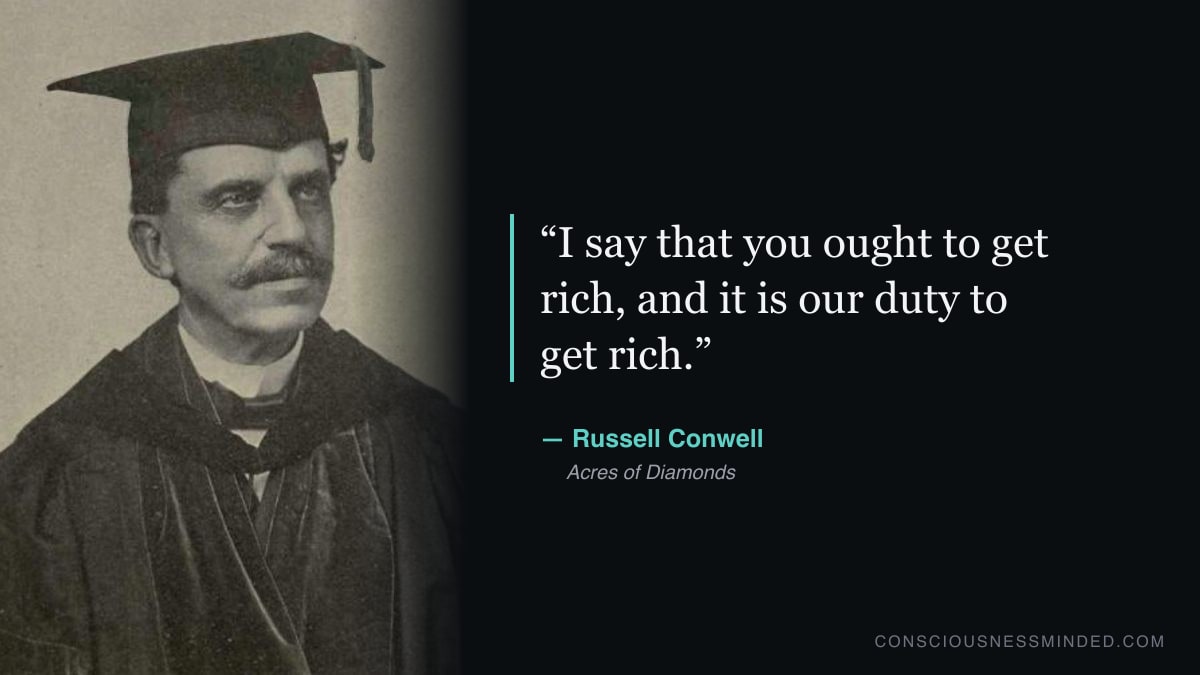
Russell Conwell, "Acres of Diamonds" (Photo: R. Campbell Tibb and Henry W. Ruoff (1867-1935), Public domain, via Wikimedia Commons)
Although it can look like a modern scheme, the prosperity gospel is over a hundred years old. In the early 20th century, the Philadelphia Baptist minister Russell Conwell told his congregation, "You have no right to be poor." He toured America delivering his "Acres of Diamonds" speech countless times. Conwell, who also founded Temple University, tied that wealth to faith and honest hard work.
By the 1950s, the movement had grown much larger. Oral Roberts changed the message in one important way. He linked earthly success directly to divine intervention, and he promised that whatever his followers gave would come back sevenfold. Thousands of worshippers filled the huge tent he took across the United States.
A 1950s crowd, from the years when tent revivals carried the prosperity gospel across America.
Then television took it from thousands to millions. Prosperity preachers shared the airwaves with faith healers who promised cures where medicine had failed. Many of them also sold miracle oils and potions. Today the same pitch reaches Nigeria, which has one of the largest Christian populations in Africa. There, one of the country's most popular preachers tells his congregation that "you're not permitted to remain poor," in a country where over half the population lives in abject poverty.
Faith, Empire and the Meek
Next, the film widens the lens. Christianity gave European empires a noble-sounding reason to conquer. In what is now Mexico, the population fell from about 25 million to 1 million in less than 200 years after Columbus arrived. Afterwards, the enslavement of Africans filled the demand for labor that this destruction created. The promise that the meek shall inherit the earth worked well here, because it is easier to stay oppressed when you are told your reward in heaven will be far greater.
The film does not spare Islam either. Its spread into India was every bit as bloody as Christian colonialism, and the two faiths later met in the Crusades.
Why the Prosperity Gospel Keeps Working
For the psychology, Aperture turns to Pascal Boyer, a professor of psychology and anthropology at Washington University in St. Louis who studies the cognitive science of religion. The film compares tithing to buying a lottery ticket. When the system is already rigged against you, a long shot can feel like the only way out of poverty.
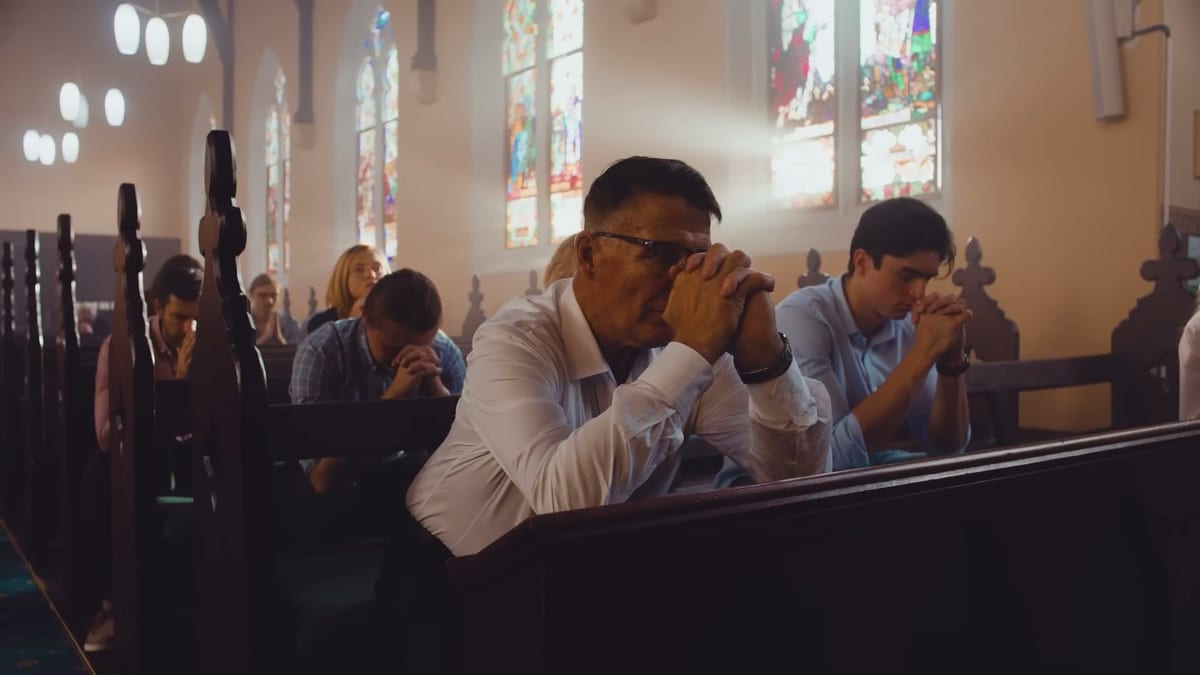
A congregation at prayer, as the film asks why people who have the least so often give the most.
Biblical scholar Dan McClellan, author of "The Bible Says So", adds a sharper point. Almost everyone who calls the Bible the final authority is "definitely doing a lot of cherry-picking." Some causes, he argues, work "more as an identity marker than anything else." A former Hillsong Boston leader explains how she found an adoptive family in the church after moving to Boston for graduate school. Father Leo Patalinghug, a Catholic priest and chef who founded the Plating Grace movement, gives the church's side. He gives three reasons for its failings: people are broken, any large group gathers "weeds and wheat" together, and evil is real.
What Faith Could Be Instead
Even so, the film does not end in cynicism. Early Christians lived simply and communally, shared what they had, and met in each other's homes. Father Leo recalls cooking with Christians, Jews and Muslims in Chefs for Peace, with really sharp knives and no harm done. Then he quotes the book of Isaiah: "You will turn spears into plowshares, swords into pruning hooks." Christ, Muhammad and the Buddha, the film suggests, would agree on one thing. An open heart and a sincere wish to improve yourself and the world matter more than which religion you follow. Religion should aid kindness and social justice. Too often, though, the prosperity gospel turns it into an obstacle.
This video was created and published by Aperture on YouTube. The commentary above is our own summary and context.
Want more on how spiritual systems shape society? Subscribe to Consciousness Minded by email and never miss a post that challenges your understanding of faith and justice.
Kenneth Copeland has a net worth estimated at over $700 million, and nearly all of it is untaxed. Most of it came from donations, and many of the people who gave can barely pay their bills. Aperture’s “How Religion Scammed the World” starts there. It then traces the prosperity gospel back a century and asks a harder question: why does religion turn so easily into a tool for the powerful?
First, the film lays two world maps on top of each other. One shows economic development, and the other shows how religious each country is. They are almost exact opposites. In short, the wealthier a country is, the less religious it tends to be.
What the Prosperity Gospel Promises
The core idea is simple. God’s faithful will inherit the earth, so wealth becomes an earthly sign that you are one of them. As a result, nobody has to choose between being righteous and being rich. Meanwhile, the preacher who flaunts a private jet keeps urging much poorer followers to give more.
The bargain is easy to spell out. Tithing takes 10% of your income. Then come offerings, donations and “seed sowing”, which together add up to about a fifth of everything you earn. In return, the reward arrives later, possibly in the next life. Outside a church, the film points out, few people would sign that deal.
A Century-Old Sales Pitch
Russell Conwell, “Acres of Diamonds” (Photo: R. Campbell Tibb and Henry W. Ruoff (1867-1935), Public domain, via Wikimedia Commons)
Although it can look like a modern scheme, the prosperity gospel is over a hundred years old. In the early 20th century, the Philadelphia Baptist minister Russell Conwell told his congregation, “You have no right to be poor.” He toured America delivering his “Acres of Diamonds” speech countless times. Conwell, who also founded Temple University, tied that wealth to faith and honest hard work.
By the 1950s, the movement had grown much larger. Oral Roberts changed the message in one important way. He linked earthly success directly to divine intervention, and he promised that whatever his followers gave would come back sevenfold. Thousands of worshippers filled the huge tent he took across the United States.
A 1950s crowd, from the years when tent revivals carried the prosperity gospel across America.
Then television took it from thousands to millions. Prosperity preachers shared the airwaves with faith healers who promised cures where medicine had failed. Many of them also sold miracle oils and potions. Today the same pitch reaches Nigeria, which has one of the largest Christian populations in Africa. There, one of the country’s most popular preachers tells his congregation that “you’re not permitted to remain poor,” in a country where over half the population lives in abject poverty.
Faith, Empire and the Meek
Next, the film widens the lens. Christianity gave European empires a noble-sounding reason to conquer. In what is now Mexico, the population fell from about 25 million to 1 million in less than 200 years after Columbus arrived. Afterwards, the enslavement of Africans filled the demand for labor that this destruction created. The promise that the meek shall inherit the earth worked well here, because it is easier to stay oppressed when you are told your reward in heaven will be far greater.
The film does not spare Islam either. Its spread into India was every bit as bloody as Christian colonialism, and the two faiths later met in the Crusades.
Why the Prosperity Gospel Keeps Working
For the psychology, Aperture turns to Pascal Boyer, a professor of psychology and anthropology at Washington University in St. Louis who studies the cognitive science of religion. The film compares tithing to buying a lottery ticket. When the system is already rigged against you, a long shot can feel like the only way out of poverty.
A congregation at prayer, as the film asks why people who have the least so often give the most.
Biblical scholar Dan McClellan, author of “The Bible Says So”, adds a sharper point. Almost everyone who calls the Bible the final authority is “definitely doing a lot of cherry-picking.” Some causes, he argues, work “more as an identity marker than anything else.” A former Hillsong Boston leader explains how she found an adoptive family in the church after moving to Boston for graduate school. Father Leo Patalinghug, a Catholic priest and chef who founded the Plating Grace movement, gives the church’s side. He gives three reasons for its failings: people are broken, any large group gathers “weeds and wheat” together, and evil is real.
What Faith Could Be Instead
Even so, the film does not end in cynicism. Early Christians lived simply and communally, shared what they had, and met in each other’s homes. Father Leo recalls cooking with Christians, Jews and Muslims in Chefs for Peace, with really sharp knives and no harm done. Then he quotes the book of Isaiah: “You will turn spears into plowshares, swords into pruning hooks.” Christ, Muhammad and the Buddha, the film suggests, would agree on one thing. An open heart and a sincere wish to improve yourself and the world matter more than which religion you follow. Religion should aid kindness and social justice. Too often, though, the prosperity gospel turns it into an obstacle.
This video was created and published by Aperture on YouTube. The commentary above is our own summary and context.
Want more on how spiritual systems shape society? Subscribe to Consciousness Minded by email and never miss a post that challenges your understanding of faith and justice.
Please consider donating. Our contributors depend on donations from viewers like you to keep our website alive. We're very grateful for even the smallest donations.










)
Comments